What Does 4L Mean?
If you've recently purchased a truck or SUV with four-wheel drive capabilities, you may have noticed "4L" and "4H" markings on your gear shifter or transfer case controls. According to automotive experts, 4L stands for "low-range four-wheel drive," a specialized setting designed for slow, high-torque driving over difficult terrain.
As more drivers invest in off-road-capable vehicles, understanding these drivetrain settings has become increasingly important. Many new truck and SUV owners don't fully grasp when to use each 4WD setting, which can lead to reduced vehicle control, mechanical strain, or getting stuck in conditions their drivetrain could otherwise handle.
4L: Low-Range Four-Wheel Drive
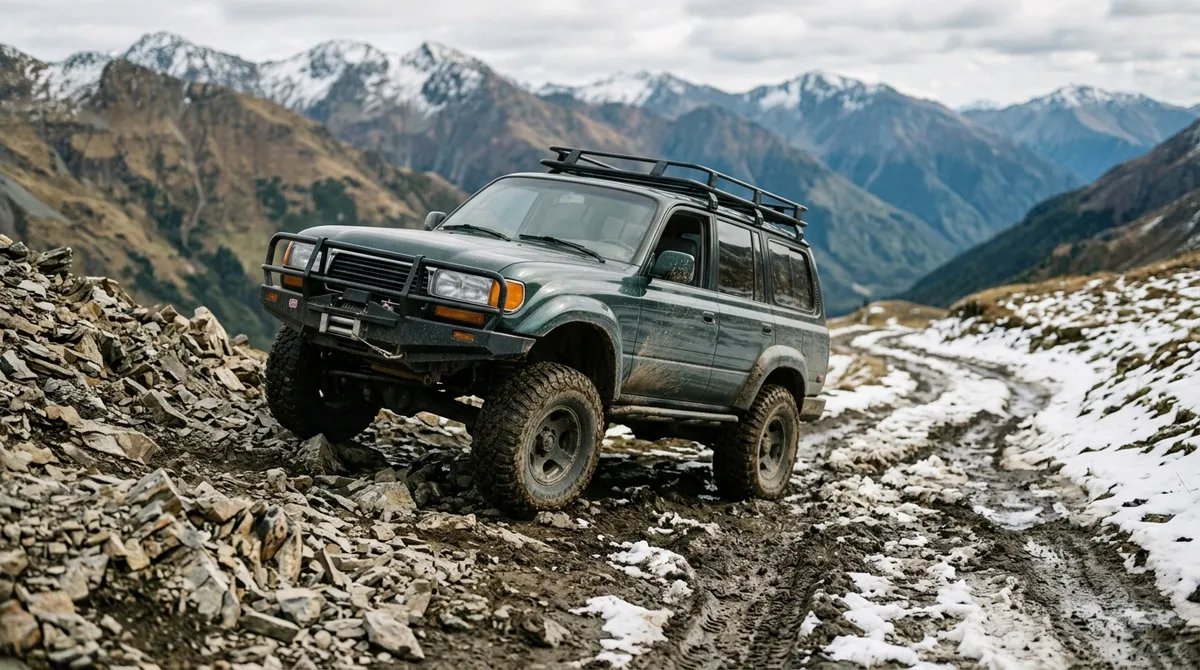
Low-range four-wheel drive (4L) is engineered for challenging off-road situations that require maximum traction and torque multiplication. This setting significantly reduces your vehicle's gear ratio, providing increased pulling power at very low speeds.
According to reports, 4L is ideal for:
- Steep climbs and descents
- Rocky terrain navigation
- Deep mud or sand
- Situations requiring precise throttle control
When engaged, 4L allows your vehicle to crawl over obstacles while maintaining control and reducing engine strain. The trade-off is speed – this setting is not designed for normal driving speeds and should only be used at very low velocities.
4H: High-Range Four-Wheel Drive
In contrast to 4L, the 4H setting represents high-range four-wheel drive, which maintains normal gear ratios while engaging all four wheels. Reports indicate that 4H is better suited for maintaining momentum on slippery or loose surfaces.
Optimal conditions for 4H include:
- Snow-covered roads
- Muddy trails where momentum is key
- Sandy surfaces
- Icy conditions
- Gravel roads
When to Use Each Setting
Choose 4L When:
You need maximum traction at low speeds, such as climbing steep rocky inclines, navigating through deep ruts, or pulling heavy loads up challenging terrain. The increased torque multiplication helps prevent wheel spin and reduces the risk of getting stuck.
Choose 4H When:
You're driving on slippery surfaces but need to maintain reasonable speeds. This setting provides improved traction without the extreme gear reduction of 4L, making it suitable for highway speeds on snow or ice.
Common Mistakes to Avoid
According to automotive experts, misusing 4WD settings can lead to several problems. New SUV and truck owners commonly make these errors:
Using 4L at high speeds: This can damage the transfer case and drivetrain components. 4L should only be used at crawling speeds, typically under 25 mph.
Leaving 4H engaged on dry pavement: This causes unnecessary wear on tires, drivetrain components, and reduces fuel economy. Some systems may also bind up, making steering difficult.
Not understanding when to disengage: Many drivers forget to switch back to 2WD when conditions improve, leading to increased fuel consumption and component wear.
Practical Application Guide
For new truck and SUV owners, understanding real-world scenarios helps determine the appropriate setting:
Rocky trails with obstacles: Use 4L for precise control over rocks and steep sections.
Winter highway driving: Engage 4H for improved traction while maintaining normal speeds.
Beach driving: 4H typically works best for maintaining momentum in sand, though 4L may be necessary for soft, deep sand.
Mud holes: Start with 4H to maintain momentum; switch to 4L if you need to crawl through deeper sections.
The Bottom Line
Understanding your vehicle's 4WD capabilities ensures you can handle various terrain conditions safely and effectively. While 4L provides maximum traction for challenging low-speed situations, 4H offers improved grip for slippery conditions at normal driving speeds.
As off-road capable trucks and SUVs continue growing in popularity, taking time to learn these fundamental drivetrain functions can prevent costly mistakes and help you get the most from your vehicle's capabilities.